Business
Starting a Small Poultry Farm in India: Costs, Licenses, and First-Year Realities
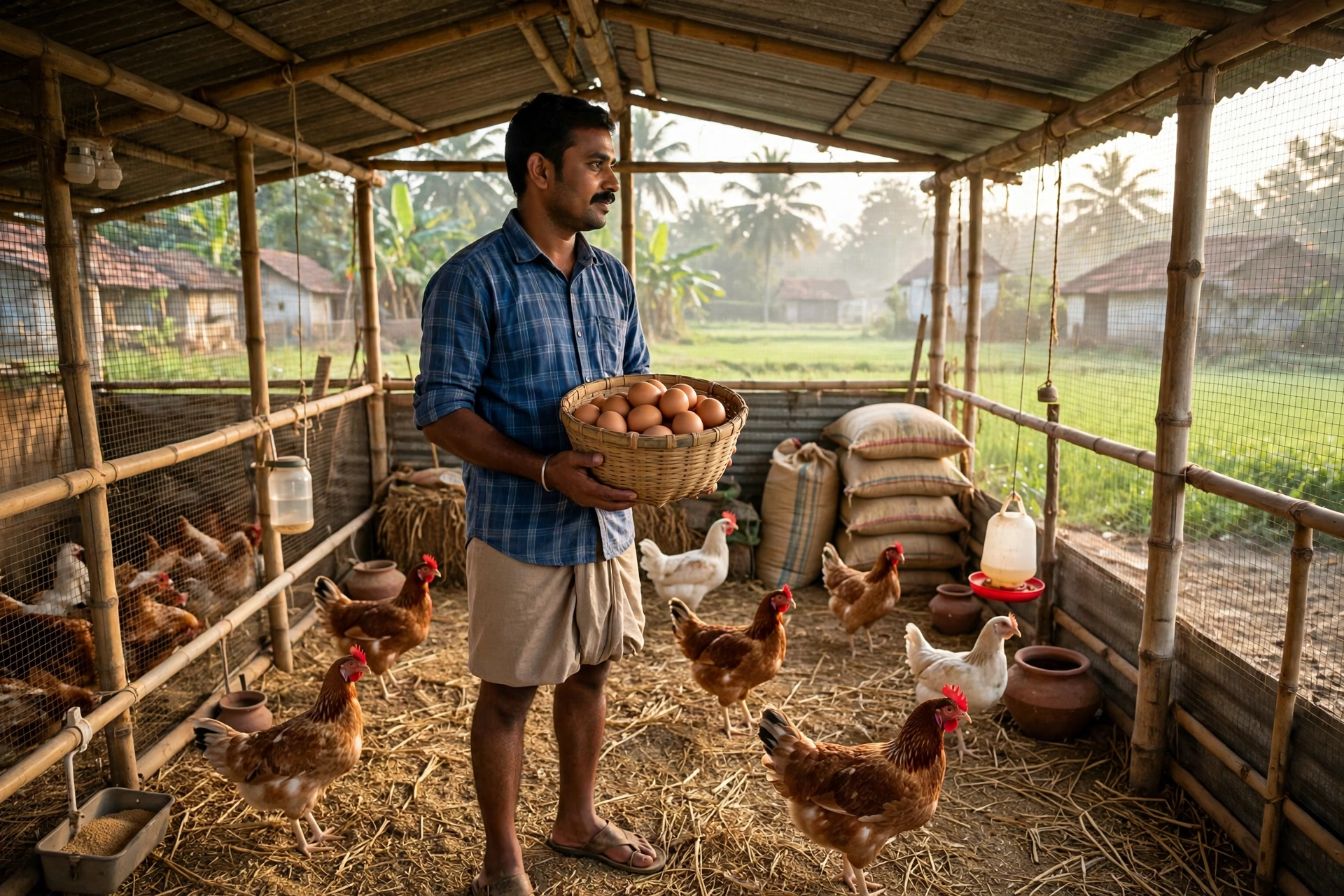
<p>Eggs and chicken are everyday food in India, which is why poultry farming attracts so many first-time rural entrepreneurs. Demand is steady, the product sells daily, and a small farm can start with modest capital. But the same familiarity makes people underestimate the work: disease can wipe out a flock in days, feed prices swing with the market, and buyers pay on their own schedule, not yours. A small poultry farm succeeds when it is started as a business with numbers, not as a side activity with hope. Here is what that actually looks like.</p><h2>Start With the Market, Not the Birds</h2><p>Before buying a single chick, answer three questions. Who will buy your eggs or birds, at what price, and how often? Visit local mandis, retailers, and nearby hotels or hostels and ask what they pay, how much they buy weekly, and whether they already have a supplier. A farm twenty kilometres from its buyers spends its margin on transport; a farm with one reliable bulk buyer is steadier than a farm chasing ten uncertain ones.</p><p>Choose between layers (eggs) and broilers (meat) based on your market, not on what a neighbour does. Layers need more patience — birds start laying after about five months — but give daily income for over a year. Broilers turn over in about six weeks but need constant restocking and carry sharper price swings. Many small farmers start with a modest broiler batch to learn the rhythms of the business, then add layers once they understand feed, disease, and buyers.</p><h2>The Real Costs of a Small Farm</h2><p>The costs people quote for poultry farming usually cover only chicks and feed. The honest budget has more lines: shed construction or repair, feeders and drinkers, chicks, feed, vaccines and medicines, electricity, litter material, labour, and transport. Feed alone is typically 60 to 70 percent of running costs, which is why feed price changes hurt more than any other single factor. Buy feed from a reliable supplier and store it dry; damp feed grows fungus that sickens birds and wastes money.</p><p>For a small start of 500 to 1,000 birds, the shed does not need to be fancy, but it must be dry, ventilated, and protected from predators and rain. Overcrowding is the most expensive mistake a beginner makes: too many birds in too little space spreads disease fast and slows growth. Follow the space guidelines for your bird type rather than squeezing in extra birds to save on shed costs. A slightly smaller healthy flock earns more than a larger sick one.</p><h2>Licences, Rules, and Neighbours</h2><p>Regulations for small poultry farms vary by state and by farm size, so check your local rules before building. In general, a small farm needs to register the business, and larger farms may need pollution control clearance and permission from the local panchayat or municipality. If you plan to sell under a brand or to organised buyers, FSSAI-related requirements for food businesses may apply. The district animal husbandry department is the right first stop for current local requirements — its advice is free and specific to your area.</p><p>Do not skip the neighbours. A poultry farm produces smell and noise, and a farm that starts without talking to nearby residents often ends up in disputes that cost more than the farm earns. Place the shed away from homes where possible, manage waste daily, and dispose of dead birds promptly and safely. Good waste management is not just courtesy; it is disease control, because accumulated waste breeds the flies and bacteria that attack your own flock.</p><h2>Disease: The Risk That Decides Everything</h2><p>Disease is the single biggest reason small poultry farms fail. One outbreak can kill a large share of the flock within days, and treatment after the fact is often too late. Prevention is the entire strategy: vaccinate on schedule, buy chicks only from reputable hatcheries, keep the shed clean and dry, limit visitors to the shed, and quarantine any new birds before mixing them with the flock. Keep a simple health log — date, symptoms, medicine given — because patterns in the log reveal problems before they become outbreaks.</p><p>Build a relationship with a local veterinary doctor before you need one. A vet who knows your farm can advise on vaccination schedules and respond quickly in an emergency; finding a vet during an outbreak wastes the hours that matter most. Budget for vaccines and basic medicines from day one, not as an afterthought when birds start dying.</p><h2>Selling, Getting Paid, and the First Year</h2><p>Selling is where many beginners lose money they earned in the shed. Agree on prices and payment terms before delivery, not after. Local traders often pay after a delay; if you depend on that payment to buy the next batch of feed, a delay becomes a crisis. Keep a small cash reserve for at least one feed cycle, and maintain more than one buyer so a single buyer cannot dictate your price.</p><p>Judge the first year honestly. Track every rupee in and out: chick cost, feed cost, medicine, transport, and sales. Most small farms take a full cycle or two to find their rhythm, and the first year often breaks even rather than making a fortune. Farmers who keep records improve fast, because they can see which batch performed, which feed worked, and which buyer paid on time. Farmers who guess, repeat the same mistakes.</p><h2>Frequently Asked Questions</h2><h3>How many birds should a beginner start with?</h3><p>A batch of 500 to 1,000 birds is a sensible start. It is large enough to teach real farm management and small enough that a mistake does not become a financial disaster.</p><h3>Layers or broilers — which is better for a beginner?</h3><p>Broilers give faster turnover and faster learning, but sharper price swings. Layers need more patience but give steadier daily income. The right choice depends on your local buyers, so check the market first.</p><h3>Do small poultry farms need a licence?</h3><p>Requirements vary by state and farm size. At minimum, register the business and check with the district animal husbandry department and local panchayat or municipality for current rules before building.</p><h3>What is the biggest mistake new poultry farmers make?</h3><p>Overcrowding the shed and skipping vaccination. Both look like savings and both cause losses far larger than the money saved. Healthy birds in proper space earn more than extra birds in a crowded shed.</p><h2>Conclusion</h2><p>A small poultry farm is a real business with real margins, not a shortcut to easy money. Start with buyers, not birds. Budget for feed, vaccines, and waste management, not just chicks. Vaccinate on schedule, keep neighbours on your side, and track every rupee. Farmers who treat the first year as paid learning — and survive it with records intact — are the ones still selling profitably in year three.</p>
Share this article
About the Author
Related Articles
Business
Starting a Small Cloud Kitchen in India: Costs, Licences, and Delivery-App Realities
Creator

Business
Starting a Home Bakery Business in India: FSSAI, Pricing, and Finding Your First Regular Customers
Creator
Business
गांव में CSC सेंटर कैसे खोलें: लागत, कमाई और आवेदन की पूरी प्रक्रिया
Creator

Business
Starting a Home-Based Spice Business in India: FSSAI, Packaging, and Finding Your First Customers
Creator