Business
Starting a Home Bakery Business in India: FSSAI, Pricing, and Finding Your First Regular Customers
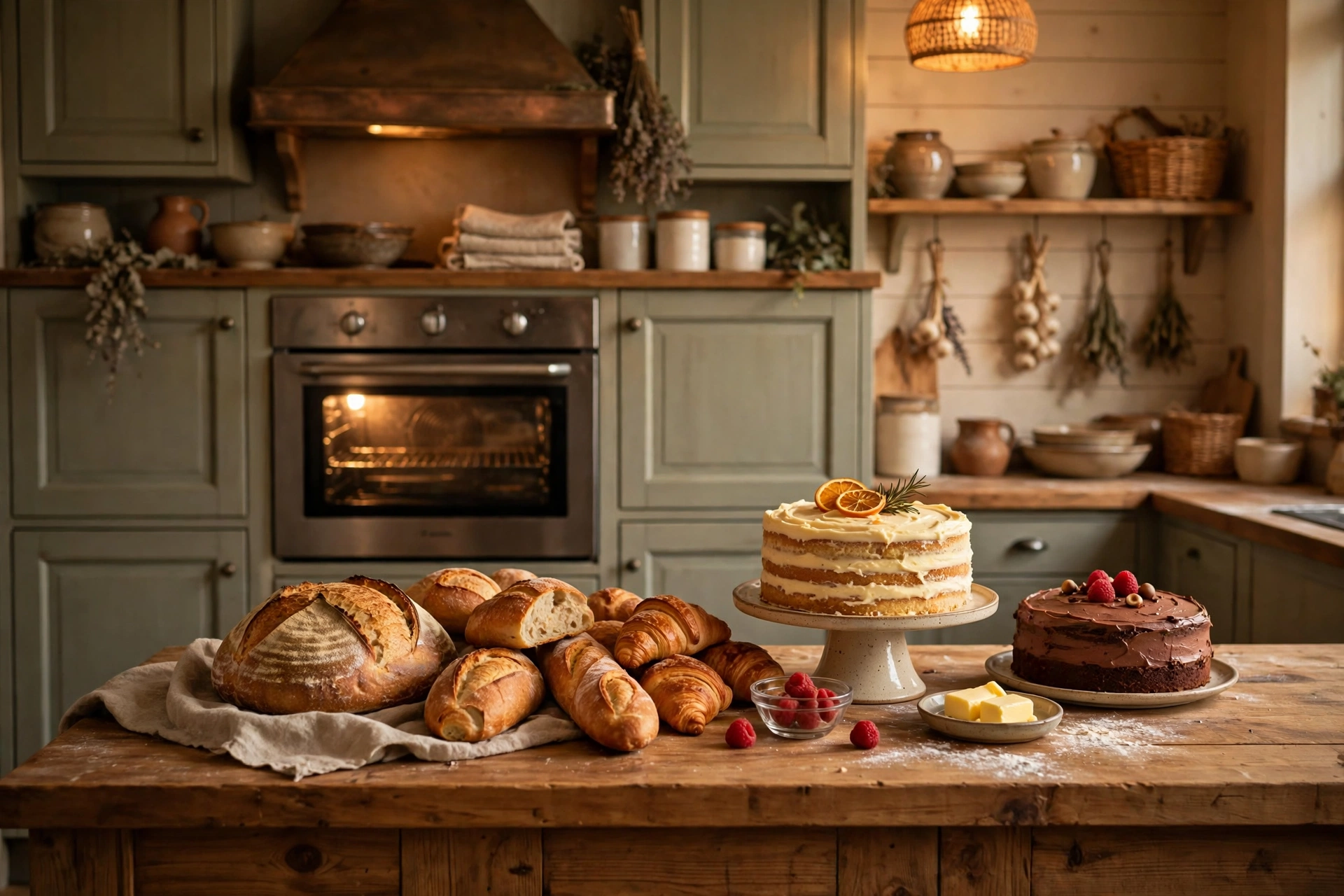
<p>Many home bakers start with the same story: friends praise a cake, someone asks for the price, and suddenly a hobby looks like a business. Turning that hobby into steady income is possible, but it needs more than good baking. You need legal basics, honest pricing, and a plan for regular customers. Without these three, even a talented baker can end up working long hours for very little profit.</p><p>This guide walks through the practical side of starting a home bakery in India. It covers registration, kitchen setup, costing with real examples, pricing, and how to find your first regular buyers. The rules and fees mentioned here are general guidance, so always check the latest requirements on the official portals before you apply.</p><h2>Start with the legal basics: FSSAI registration</h2><p>Food sold to customers in India generally needs registration under the Food Safety and Standards Authority of India, known as FSSAI. A small home bakery usually begins with a basic FSSAI registration, while a larger turnover may need a state licence. The exact category depends on your annual turnover and the scale of your work, so check the current criteria on the FSSAI portal rather than relying on an old blog post.</p><p>For registration you will typically need identity proof, address proof, a photograph, and details of the food items you plan to sell. Keep your kitchen clean, store raw materials in labelled containers, and maintain basic hygiene records. Many customers now ask for an FSSAI number before ordering, especially for cakes for children, so this step also builds trust.</p><h2>Set up a kitchen that can handle orders</h2><p>You do not need a commercial kitchen on day one, but you do need a system. Separate your baking tools from daily cooking utensils where possible, keep a clean work surface, and store finished items away from strong-smelling foods. A reliable oven, a weighing scale, measuring cups, cake tins in two or three common sizes, and airtight boxes are enough to start.</p><p>Plan your capacity honestly. If your oven fits one large cake at a time, do not accept three large cakes for the same morning. Note down your baking time, cooling time, and decorating time for each product. This simple record will save you from late deliveries, which are the fastest way to lose a new customer.</p><h2>Costing and pricing with a real example</h2><p>Pricing is where most home bakers go wrong. They count only flour, sugar, and eggs, and forget packaging, electricity, gas, delivery, and their own time. A useful formula is simple: add ingredient cost, packaging cost, and a share of utility cost, then add your labour charge, and finally add a small profit margin. Write this down for every product.</p><p>Take a one-kilogram chocolate cake as an example. Suppose ingredients cost 280 rupees, the box and board cost 60 rupees, and gas and electricity add about 40 rupees. That gives a direct cost of 380 rupees. If you add 200 rupees for your time and skill and 120 rupees as profit, the selling price becomes 700 rupees. If a customer asks for custom decoration, fondant work, or urgent delivery, charge extra for it separately instead of absorbing the cost silently.</p><p>Compare your price with nearby bakeries, but do not copy the lowest price in the market. A very low price may bring orders for a week and losses for a month. It is better to sell fewer cakes at a fair price than to sell many cakes and earn nothing after costs.</p><h2>Build a small menu that sells</h2><p>Begin with five to seven items you can make consistently well. A good starter menu might include a chocolate cake, a vanilla cake, a fruit cake, brownies, cookies, and one seasonal special such as mango cake in summer. Too many items confuse customers and increase your raw material waste.</p><p>Photograph each item in natural light, on a plain background, with a simple plate or stand. Write the weight, flavour, price, and notice period clearly. For example, state that customised cakes need two days of notice and that eggless options are available on request. Clear details reduce back-and-forth messages and cancelled orders.</p><h2>Finding your first regular customers</h2><p>Your first customers are usually closer than you think. Start with your housing society, office colleagues, school parent groups, and nearby shops. Offer tasting boxes with four small pieces at a reasonable price, and include a small card with your menu and contact number. One tasting box given to the right person can lead to birthday orders for months.</p><p>Use WhatsApp and Instagram consistently rather than posting only when you have an order. Share one photo or short video each week, mention the flavour and price, and reply to messages quickly. Ask happy customers for a short review or a photo of the cake at their celebration, with their permission. Regular customers often come from repeat occasions, so note birthdays and anniversaries, with permission, and send a polite reminder a week before.</p><p>Local tie-ups also help. A small cafe, a gift shop, or a salon may want weekly cookies or brownies. Start with a small trial quantity, agree on price and delivery day in writing, and deliver on time every week. Reliability matters more than a fancy menu in this kind of partnership.</p><h2>FAQ</h2><h3>Do I need FSSAI registration before my first order?</h3><p>It is strongly advised to complete at least basic registration before selling food regularly. Registration protects your customers and your business, and it helps you get orders from people who check food safety details. The process is designed for small food businesses, so do not delay it because it looks complicated.</p><h3>How much money do I need to start?</h3><p>Many home bakers start with existing kitchen equipment and a small budget for packaging, raw materials, and registration. The exact amount depends on your city and menu. Start small, track every expense for the first month, and reinvest early profits into better packaging and tools instead of expanding the menu too quickly.</p><h3>Should I offer free delivery in the beginning?</h3><p>Free delivery can attract orders, but it can also eat your profit if distances are long. A practical approach is to offer free delivery within a short distance, such as two kilometres, and charge a fixed delivery fee beyond that. Mention the delivery charge clearly before confirming the order to avoid arguments later.</p><h3>What if a customer is unhappy with a cake?</h3><p>Listen calmly, ask what went wrong, and check your own notes about that order. If the mistake was yours, offer a fair solution such as a partial refund or a replacement for the next occasion. A polite response can turn an unhappy customer into a loyal one, while an argument can cost you several future orders.</p><h2>Conclusion</h2><p>A home bakery grows on three habits: safe and legal food handling, pricing that respects your time, and reliable delivery. Start with a small menu, price every item with real costs, and build your customer base one celebration at a time. If you stay consistent for three months, you will know which products sell, which customers return, and what your next step should be.</p>
Share this article
About the Author
Related Articles
Business
Starting a Small Cloud Kitchen in India: Costs, Licences, and Delivery-App Realities
Creator
Business
Starting a Small Poultry Farm in India: Costs, Licenses, and First-Year Realities
Creator
Business
गांव में CSC सेंटर कैसे खोलें: लागत, कमाई और आवेदन की पूरी प्रक्रिया
Creator
Business
Starting a Home-Based Spice Business in India: FSSAI, Packaging, and Finding Your First Customers
Creator