Business
Starting a Home-Based Spice Business in India: FSSAI, Packaging, and Finding Your First Customers
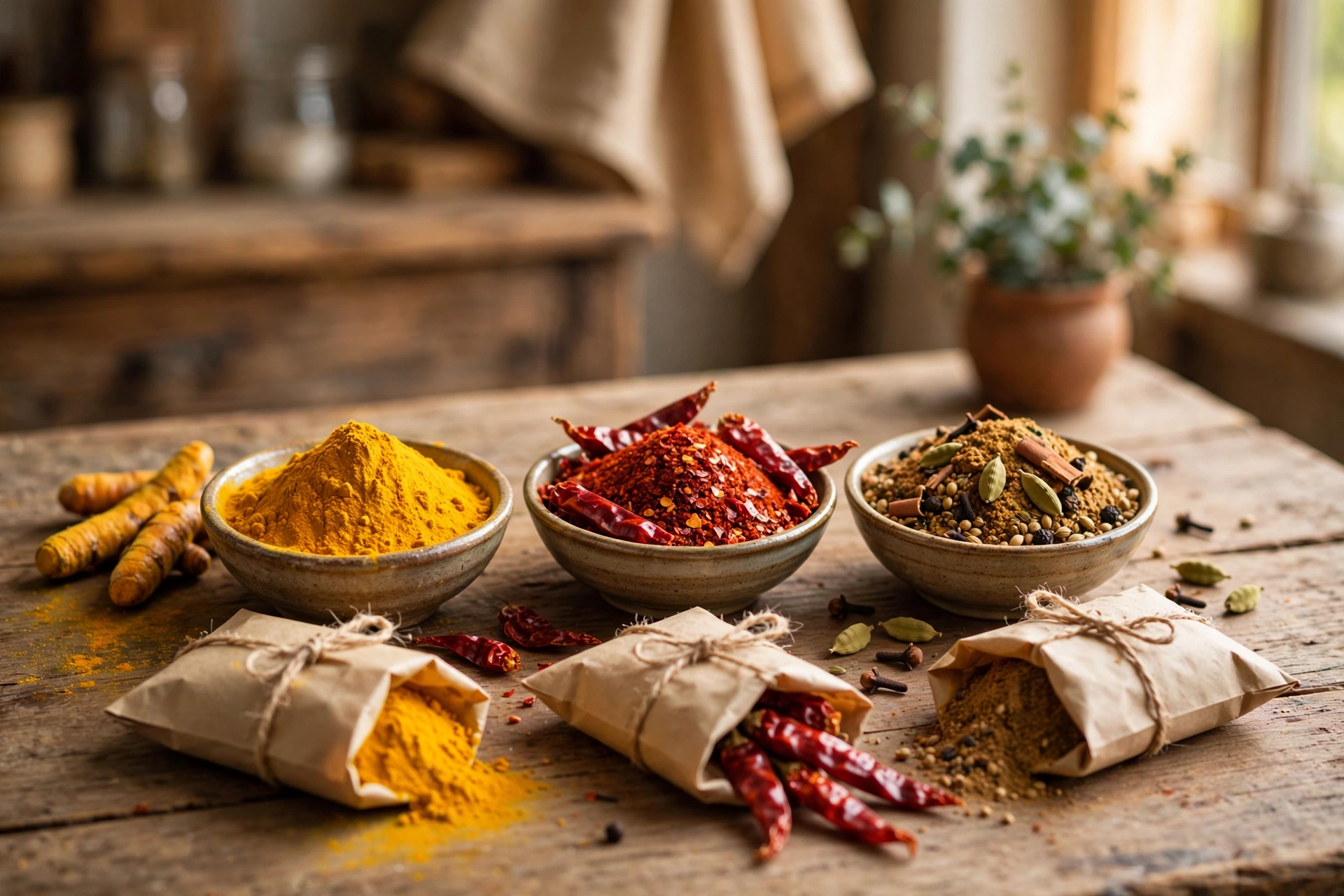
<p>Walk into any Indian kitchen and you will find the same truth: food without spices is incomplete. Turmeric, chilli, coriander, garam masala and dozens of regional blends are daily essentials, not luxuries. That is why a home-based spice business is one of the most practical small businesses to start in India. It needs modest capital, uses skills many families already have, and can grow step by step from a few neighbourhood customers to online orders across the country.</p><p>This guide explains how to start honestly and legally: choosing products, getting FSSAI registration, packing well, pricing fairly and finding your first customers. It is not a get-rich-quick promise. Spice margins depend on raw material prices, packaging costs and how consistently you maintain quality. But with patience and clean practices, a small spice brand can become a steady source of income.</p><h2>Start With One Product, Not Twenty</h2><p>The biggest mistake new sellers make is launching ten products at once. Each spice needs separate sourcing, grinding, testing and packaging, and mistakes multiply quickly. Start with one or two products you already make well. For example, if your family garam masala recipe gets praised by everyone who tastes it, start with that and one more simple product such as turmeric powder or red chilli powder.</p><h2>FSSAI Registration: The Non-Negotiable Step</h2><p>Any food business in India, even a home-based one, needs FSSAI registration or licence. For small businesses with annual turnover below the prescribed threshold, a basic FSSAI registration is usually the starting point, while larger operations need a state licence. The exact category depends on your turnover and scale, so check the current rules on the official FSSAI portal or ask a local food safety officer before you apply.</p><p>To apply, you generally need identity proof, address proof of the premises, a passport-size photograph and details of the food products you will sell. The application is made online through the FoSCoS portal. Keep your premises clean, store raw materials away from the floor and away from chemicals, and maintain basic hygiene records. Many beginners worry that registration is complicated, but it is mostly a matter of filling the form correctly and keeping your kitchen clean. Do not sell packed spices without registration, because marketplaces, shops and even cautious customers will ask for your FSSAI number, and selling without it can lead to penalties.</p><h2>Sourcing, Grinding and Quality Control</h2><p>Quality starts at the mandi or wholesale supplier. Buy whole spices rather than pre-ground powder whenever possible, because whole spices stay fresh longer and are harder to adulterate. Check for moisture, stones, dust and dull colour before buying. Turmeric should be deep yellow and hard, chillies should be dry and bright, and coriander seeds should smell fresh when crushed between your fingers.</p><p>Grinding is where many home brands fail. Grind in small batches so the powder stays aromatic, and let the ground spice cool fully before packing, otherwise moisture gets trapped and the powder cakes. Sieve the powder for uniform texture and taste a small sample from every batch. Keep a simple notebook for each batch: date, supplier, quantity, grind setting and your own taste rating. This habit seems boring, but when a customer complains, you can trace the batch and fix the problem. Never add artificial colour to make spices look brighter. Customers may be impressed once, but they will not return, and adulteration can destroy your brand permanently.</p><h2>Packaging That Protects and Sells</h2><p>Good packaging does two jobs: it keeps spices fresh and it makes your brand look trustworthy. Use food-grade pouches or jars that seal tightly and protect against moisture and air. Stand-up pouches with a zip lock are popular because customers can reseal them after use. Start with small pack sizes such as 100 grams and 200 grams, because new customers prefer trying a small pack before committing to a large one.</p><p>Your label must carry honest information: product name, net weight, ingredients, your brand name, FSSAI number, manufacturing or packing date, best-before period, storage instructions and your contact details. Do not print exaggerated claims such as cure or medical benefit. A clean label with clear text beats a flashy label with tiny, unreadable print. If you can afford it, get a simple logo designed and keep the same colours and font across all packs, so customers recognise your brand instantly on a shop shelf or in a WhatsApp photo.</p><h2>Pricing: Cover Costs Before You Dream of Profit</h2><p>Price your product by adding up real costs, not by guessing. List the cost of raw material, grinding charges or electricity, packaging, label printing, transport and your own time. Then add a reasonable margin. For example, if 100 grams of garam masala costs you 45 rupees to produce and pack, selling it at 60 to 70 rupees leaves room for discounts and delivery costs while still earning a profit. Selling too cheap may win orders at first, but you will burn out when raw material prices rise.</p><h2>Finding Your First Fifty Customers</h2><p>Your first customers will almost never come from ads. They come from people who already trust you. Start by telling your housing society, office colleagues, relatives and local shopkeepers that you have started. Give small tasting samples with a short note about your FSSAI number and pack sizes. Ask buyers to share honest feedback and, if they like the product, to tell one more person. Word of mouth is slow but powerful, because food recommendations travel fast in families.</p><h2>FAQ</h2><h3>Do I need FSSAI registration for a tiny home business?</h3><p>Yes, in general any food business needs FSSAI registration or licence, even at a small scale. The type depends on your turnover and operations, so check the current rules on the official portal before you start selling.</p><h3>How long do homemade ground spices stay fresh?</h3><p>Ground spices lose aroma over time, even in sealed packs. As a practical guide, most home-ground spices taste best within three to six months of grinding if stored in a cool, dry place away from sunlight. Always print a realistic best-before date and grind in small batches.</p><h3>Should I sell loose or packed spices?</h3><p>Packed spices with proper labelling are better for building a brand, because they carry your FSSAI number, weight and contact details. Loose selling may be cheaper, but it makes quality complaints harder to handle and limits your entry into shops and online platforms.</p><h3>How much money do I need to start?</h3><p>It depends on your scale, but many home sellers start with a modest budget for raw material, pouches, labels and registration fees. Start small, sell the first batches, and reinvest the profit instead of borrowing heavily at the beginning.</p><h2>Conclusion</h2><p>A home-based spice business rewards consistency more than clever marketing. Choose one product and perfect it, complete your FSSAI registration, source clean raw material, pack honestly and price fairly. Find your first customers among people who know you, earn their repeat orders, and only then expand your range. If you keep quality steady batch after batch, your spice packets will do the marketing for you, one kitchen at a time.</p>
Share this article
About the Author
Related Articles
Business
Starting a Small Cloud Kitchen in India: Costs, Licences, and Delivery-App Realities
Creator

Business
Starting a Home Bakery Business in India: FSSAI, Pricing, and Finding Your First Regular Customers
Creator
Business
Starting a Small Poultry Farm in India: Costs, Licenses, and First-Year Realities
Creator
Business
गांव में CSC सेंटर कैसे खोलें: लागत, कमाई और आवेदन की पूरी प्रक्रिया
Creator