Education
School Admission Interviews in India: What Parents and Children Should Actually Practise
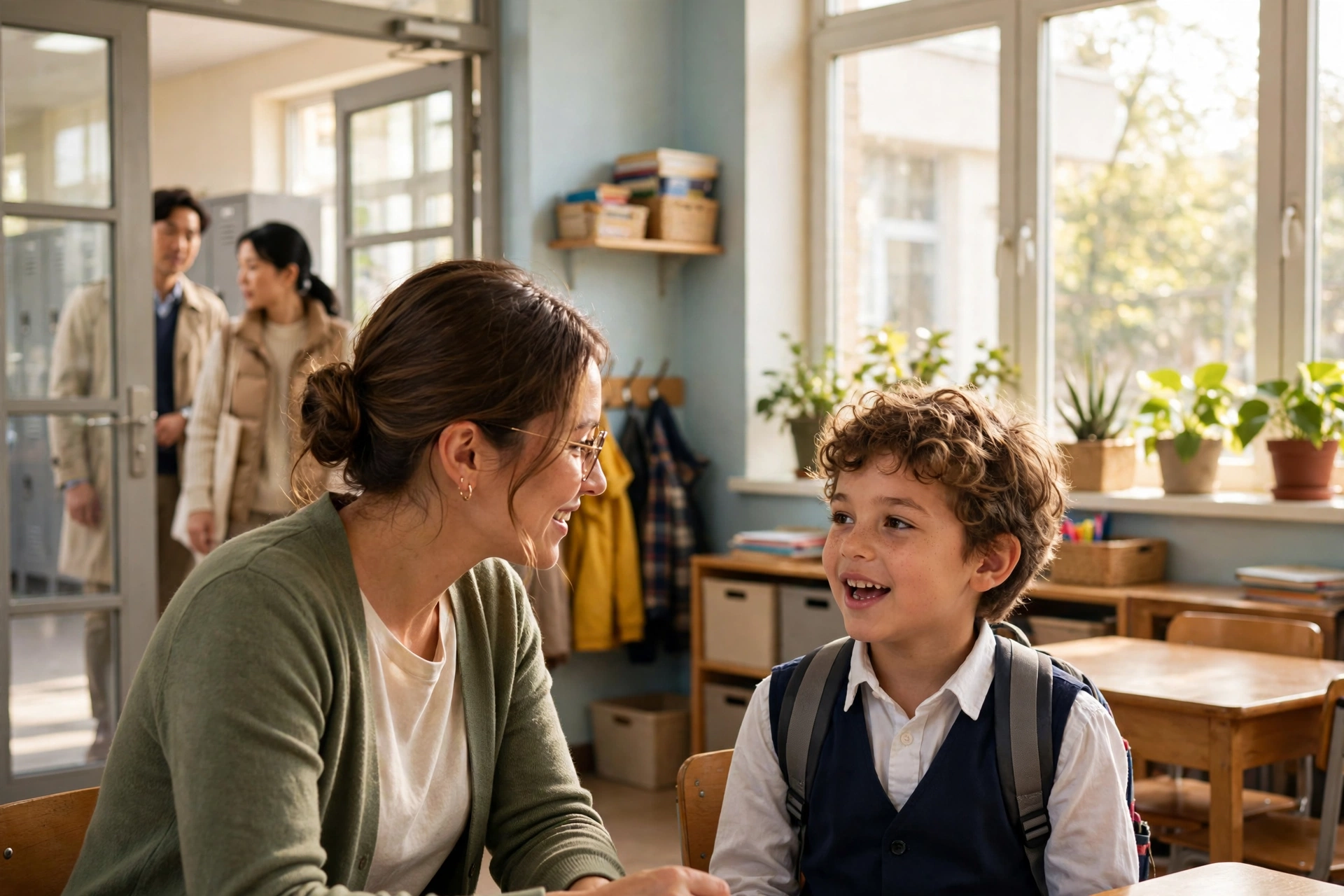
<p>School admission interviews can feel stressful for both parents and children, especially when it is the first time a family goes through the process. It helps to remember what these interactions are usually meant to check: whether the child can communicate comfortably, follow simple instructions, play and interact with others, and whether the family understands the school and its expectations. They are not exams in the academic sense, and they are not meant to test how much a child has memorised. With calm, short, and regular practise at home, most children can walk in feeling more confident, and parents can answer questions without sounding rehearsed. This guide gives a realistic practise plan and a clear set of habits to follow and avoid.</p><h2>What schools usually observe</h2><p>For younger children, schools often observe everyday skills rather than textbook knowledge. A child may be asked to name colours, count objects, identify shapes, talk about family members, or complete a simple puzzle. Teachers may watch how the child listens, waits for a turn, shares toys, and responds to a new adult. For older children, the conversation may include questions about hobbies, favourite books, school life, and simple reasoning tasks. In both cases, the school is also observing the parents: how they talk about the child, whether they listen without interrupting, and whether they have realistic expectations. No school expects a perfect performance. A child who is relaxed, curious, and willing to try is usually seen more positively than a child who gives memorised answers in a nervous rush. Parents should therefore focus on comfort and communication, not on drilling long lists of facts.</p><h2>A four-week practise plan that stays light</h2><p>Week one should focus on conversation. Spend ten minutes a day talking with your child about everyday topics such as favourite food, a recent outing, or a story they liked. Ask open questions that need more than a yes or no answer, and listen fully before responding. Week two can add simple tasks such as counting toys, naming colours around the house, drawing a picture and describing it, and following two-step instructions like putting a book on the table and bringing a pencil. Week three should include a mock interaction with a trusted adult who is not a parent, so the child practises talking to someone new. Keep it playful, praise effort rather than only correct answers, and stop before the child gets tired. Week four is for revision and confidence: revisit the activities the child enjoyed, practise greeting an adult politely, and talk about what will happen on the day so there are no surprises.</p><h2>What parents should practise saying</h2><p>Parents are often asked why they chose the school, what the child enjoys, how the child spends time at home, and how the family supports learning. Prepare honest, short answers in your own words rather than memorising long speeches. For example, instead of saying a school is the best in the city, explain what you noticed about its approach, its location, or its activities that suits your child. Talk about the child realistically, including strengths and areas where the child is still learning, because that sounds more credible than claiming the child is perfect at everything. Practise listening to the full question before answering, and avoid interrupting the interviewer or correcting the child mid-sentence. If you do not know something, it is better to say so simply than to invent an answer.</p><h2>Do and do not comparison</h2><p>The table below is a quick comparison in words. Do keep mornings calm, let the child eat and rest well before the interaction, and arrive early so there is time to settle. Do let the child answer in their own words, even if the answer is simple, and do praise the child for trying afterwards regardless of the outcome. Do dress the child in comfortable, neat clothes that they can move and play in. Do not coach the child to give fixed answers to guessed questions, because interviewers can usually tell and the child may freeze if a different question appears. Do not compare the child with siblings or other children in front of them, and do not show anxiety by repeatedly warning the child to behave. Do not argue with the school staff or demand to know the result on the spot.</p><h2>On the day and after the result</h2><p>On the day, keep the routine as normal as possible. Wake the child at the usual time, give a familiar breakfast, and talk about the visit as a chance to meet new people and see a new school, not as a test that must be passed. Carry water, a small snack, and any documents the school asked for, and check the list the night before so nothing is forgotten. If the child becomes shy or quiet during the interaction, do not panic or apologise excessively. A gentle prompt from a parent is enough, and interviewers are used to children who need a moment to warm up. After the visit, thank the child for participating and avoid analysing every answer in detail. If the result is positive, celebrate calmly and complete the admission steps on time. If it is not, remember that one outcome does not define the child, and many good schools suit different children in different ways.</p><h2>FAQ</h2><h3>Should my child memorise answers before the interview</h3><p>No, memorised answers often sound unnatural and can confuse the child if the question is asked differently. It is better to practise everyday conversation, listening, and simple tasks so the child can respond naturally.</p><h3>How should parents handle a shy child</h3><p>Give the child time, practise talking to new adults in low-pressure settings, and avoid labelling the child as shy in front of others. Short, regular practise and a calm morning usually help more than pressure.</p><h3>What if the child gives a wrong answer</h3><p>That is normal and rarely decisive on its own. Schools look at overall communication and behaviour, not at a single answer. Parents should not correct the child harshly during the interaction.</p><h3>How early should we start preparing</h3><p>Three to four weeks of short daily practise is enough for most families. Starting too early with heavy drilling can tire the child, while starting the night before creates unnecessary stress.</p><h2>Conclusion</h2><p>School admission interviews go better when preparation is calm, short, and focused on real skills such as talking, listening, playing, and following instructions. Parents help most by staying relaxed, answering honestly, and letting the child be themselves. Avoid memorised scripts, comparisons, and last-minute pressure, and keep the day normal and comfortable. Whatever the result, the child deserves praise for trying, and the right school is the one where the child can learn happily and grow at their own pace.</p>
Share this article
About the Author
Related Articles
Education
बोर्ड परीक्षा की तैयारी: आखिरी 90 दिन का रिवीजन प्लान जो सच में काम करे
Creator
Education
How to Choose the Right Playschool for Your Child: Visits, Questions, and Red Flags Parents Miss
Creator
Education
10वीं के बाद सही स्ट्रीम कैसे चुनें: साइंस, कॉमर्स और आर्ट्स की पूरी तुलना
Creator

Education
How to Learn Spoken English at Home Without Coaching: A Daily Practice Plan
Creator