Automobile
Buying a Used Car in India: How to Check Accident History, Pending Challans, and Real Condition
<p>A used car can be the smartest purchase you make — or the most expensive mistake. The difference is rarely luck. It is the hour you spend checking the car's real history before handing over money. A shiny polish hides a lot: an accident repair, unpaid challans, a rolled-back odometer, or even a loan the seller never cleared. Every one of these is checkable, and most checks are free.</p>
<p>This guide covers the checks that matter, in the order to do them: documents first, online history second, physical inspection third, and the money step last.</p>
<h2>Step 1: Documents Before You Even See the Car</h2>
<p>Ask the seller for photos of four documents before you travel: the Registration Certificate (RC), the insurance policy, the Pollution Under Control (PUC) certificate, and the service history booklet or records. Check that the name on the RC matches the seller's ID — if the seller is not the registered owner, you need to understand why, and you need the actual owner's involvement in the transfer.</p>
<p>On the RC, check the fuel type, the registration date, the number of previous owners, and whether the RC is marked as hypothecated (meaning a loan is attached). A hypothecated car cannot be transferred cleanly until the bank issues a No Objection Certificate (NOC) and the hypothecation is removed from the RC. Never pay in full for a car with an uncleared loan — the bank, not the seller, has the first claim on it.</p>
<h2>Step 2: Online Checks That Take Ten Minutes</h2>
<p>India's VAHAN portal and the mParivahan app let you check a vehicle's basic details free: registration, fitness validity, insurance validity, and whether it is blacklisted. Next, check pending traffic challans on your state's traffic police portal or the Parivahan challan page using the registration number — unpaid challans can run into thousands and, in some cases, follow the vehicle rather than the previous owner.</p>
<p>For accident and service history, paid vehicle-history reports exist, but a free and powerful check is the service history itself: call the brand's service centre with the chassis number and ask for the service record summary. A car that shows regular servicing at authorized centres is a very different buy from one with a two-year gap. Also verify the insurance claim history — repeated own-damage claims are a strong hint of accident repairs, even when the bodywork looks perfect.</p>
<h2>Step 3: The Physical Inspection That Catches Repairs</h2>
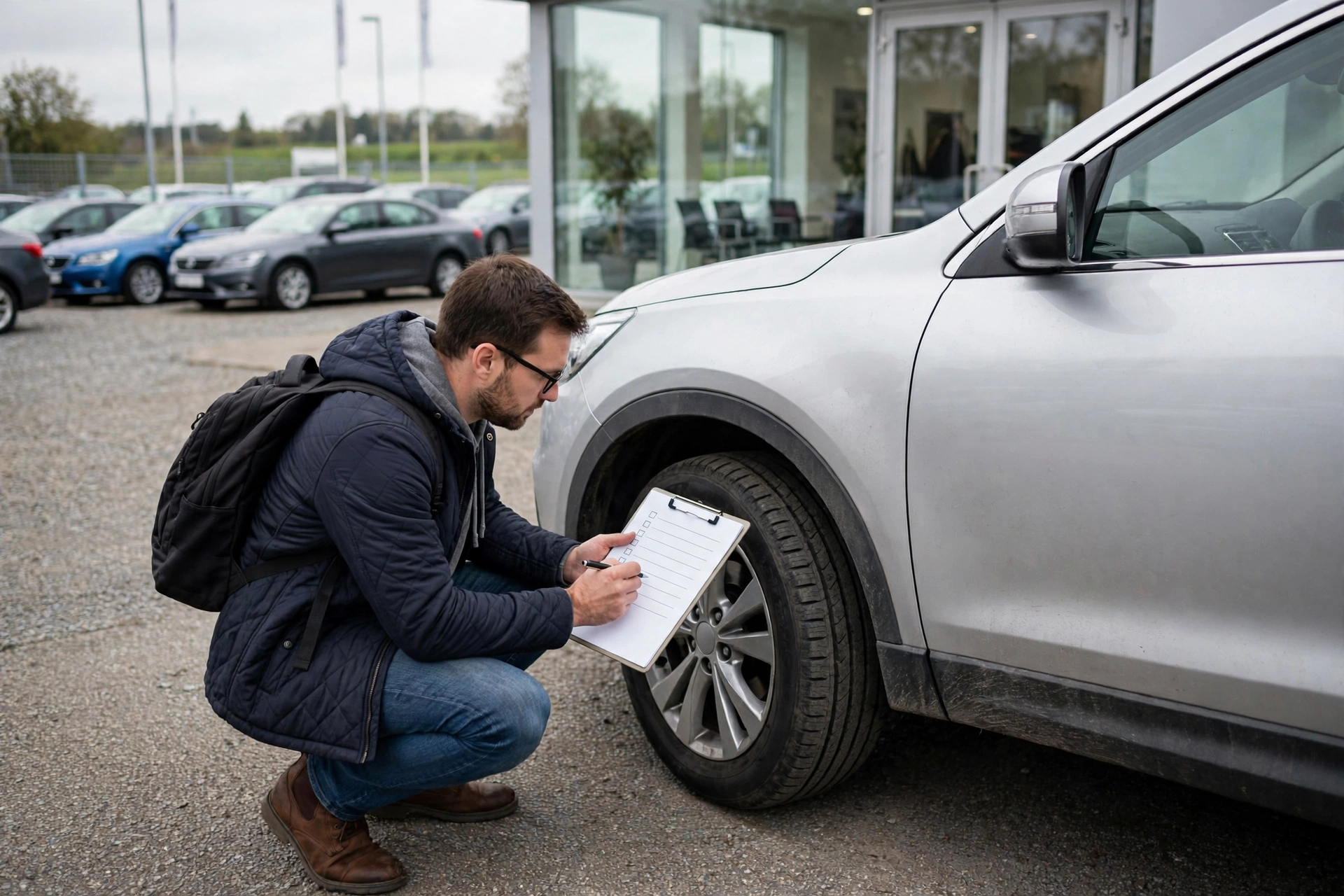
<p>Do the inspection in daylight, never at night or in rain. Walk around the car and look for mismatched paint shades between panels, uneven panel gaps, and overspray on rubber seals or window edges — all signs of repainting after an accident. Open the bonnet and check for non-factory welds, bent frame rails, or fresh paint inside the engine bay.</p>
<p>Then check the five things sellers hope you skip: tyre manufacturing dates (all four should be roughly the same age), the odometer against the service booklet's last recorded reading, the underside for rust or oil leaks, the air-conditioning at full blast for five minutes, and a cold start — a car that starts rough when cold but smooths out when warm is hiding something. Finally, take a test drive of at least 20 minutes including a highway stretch: listen for suspension noise, check that the steering does not pull to one side, and test the brakes hard once in a safe place.</p>
<h2>Step 4: Price It Right, Then Pay Safely</h2>
<p>Before negotiating, check the car's approximate market value on two or three used-car platforms for the same model, year, and city. This gives you a range, not a single number — use it. A price far below market is not a bargain; it is a warning. Common reasons for suspiciously low prices include pending loans, accident history, or an odometer rollback.</p>
<p>When you agree on a price, pay by bank transfer or cheque — never large cash amounts — and get a signed sale agreement stating the price, the date, and that the seller will complete the RC transfer. Complete the RC transfer at the RTO promptly; until the transfer is done, challans and legal liability can still come back to the previous owner — and if you are the buyer, you want your name on that RC before you drive it daily. Budget separately for transfer fees, insurance transfer or a new policy in your name, and immediate servicing after purchase.</p>
<h2>Red Flags: Walk Away If You See These</h2>
<ul>
<li>RC owner name does not match the seller, with no clear explanation</li>
<li>Hypothecation still active on the RC, with no bank NOC</li>
<li>Odometer reading lower than the last service record</li>
<li>Fresh paint or welding in the engine bay or boot</li>
<li>Seller refuses an independent mechanic inspection</li>
<li>Price far below market with pressure to "decide today"</li>
</ul>
<h2>FAQ</h2>
<h3>Should I pay for an independent inspection?</h3>
<p>Yes. A trained mechanic's inspection costs a small amount and catches problems — structural repairs, engine issues, flood damage — that no online check can. If the seller refuses, walk away.</p>
<h3>How do I check if the odometer is tampered with?</h3>
<p>Compare the reading with the service history booklet, insurance records, and previous PUC certificates, which often record the reading. Inconsistencies are the giveaway.</p>
<h3>Who pays pending challans after I buy?</h3>
<p>Check and clear them before purchase, and state it in the sale agreement. Unpaid challans tied to the vehicle can become your problem after transfer.</p>
<h3>How long does RC transfer take?</h3>
<p>Typically two to four weeks after submitting the forms at the RTO, depending on the state. Keep copies of everything you submit.</p>
<h2>Conclusion</h2>
<p>Buying a used car is not about finding a perfect car — it is about refusing to buy a car with hidden problems. Documents, online checks, a daylight inspection, and a safe payment cover almost everything that can go wrong. Spend the hour, and the car you drive home will be one you actually wanted.</p>
Share this article
About the Author
Related Articles
No related articles found.