Food
Balcony Kitchen Garden for Indian Winters: Vegetables That Actually Grow in Pots
<p>Indian winters are the best season for a balcony garden. The harsh summer sun is gone, leafy vegetables love the cool weather, and a few pots on a balcony can supply fresh palak, methi, dhania, and tomatoes for months. You do not need a terrace, a big budget, or gardening experience — just the right pots, the right plants for winter, and a watering routine you can actually keep.</p>
<p>This guide covers what to grow, how to set up pots, and the mistakes that kill most first balcony gardens.</p>
<h2>What Grows Best in an Indian Winter Balcony</h2>
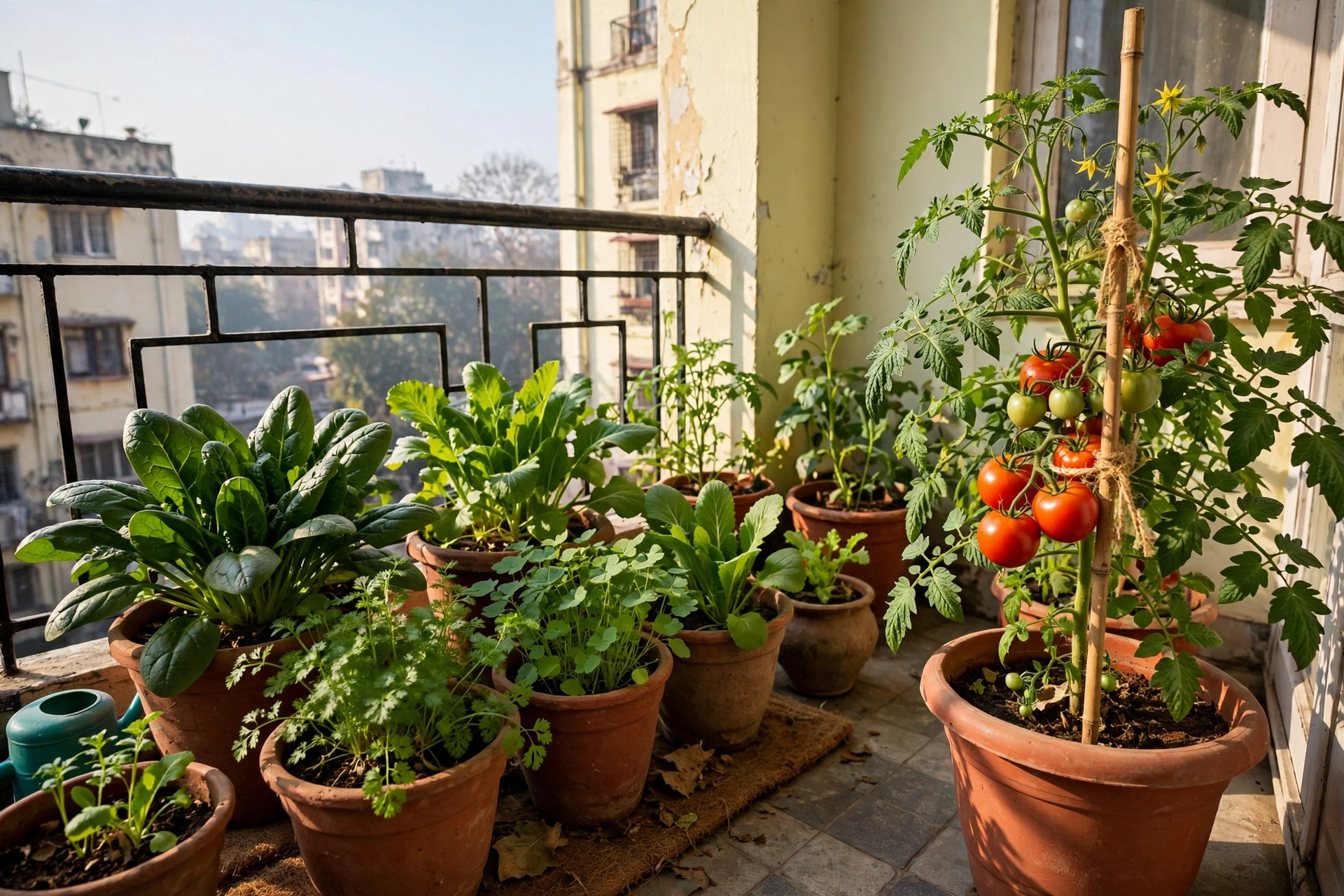
<p>Winter vegetables fall into two groups: leafy greens that grow fast and fruiting plants that take longer but reward patience. Start with the fast group for early wins. Palak (spinach) is ready in 30-40 days from seed and regrows after cutting. Methi (fenugreek) is ready in 25-30 days and grows in shallow pots. Dhania (coriander) takes 40-50 days but is used daily in Indian cooking. Pudina (mint) grows from cuttings, not seeds, and spreads fast — keep it in its own pot or it will take over.</p>
<p>For the second group, tomatoes are the classic winter balcony crop: one healthy plant in a 12-14 inch pot can give fruit for two to three months. Green chillies are similarly productive and need little space. If your balcony gets at least 4-5 hours of direct sun, try capsicum and brinjal too. If it gets less sun, stick to leafy greens and herbs — they tolerate partial shade far better than fruiting plants.</p>
<h2>Setting Up Pots That Actually Work</h2>
<p>Pot size matters more than most beginners think. Leafy greens do well in wide, shallow containers (at least 8-10 inches deep). Tomatoes, chillies, and brinjal need deeper pots — 12-14 inches minimum — because their roots go deep. Always check drainage: every pot needs holes at the bottom, plus a layer of small stones or broken pottery pieces so water drains instead of pooling and rotting the roots.</p>
<p>For soil, a simple mix works: roughly 40% garden soil, 30% compost (vermicompost is easy to buy), and 30% cocopeat or river sand for drainage. Fill pots to about an inch below the rim so watering does not spill soil everywhere. If you are buying ready potting mix, check that it is not pure cocopeat — pure cocopeat holds water but has almost no nutrients, and plants in it starve within weeks unless you feed them constantly.</p>
<h2>Seeds, Sowing, and the First Two Weeks</h2>
<p>Buy seeds from a reputable nursery or seed shop, and check the packing date — old seeds germinate poorly, which is the most common reason beginners think they have a "black thumb." Sow seeds shallow: a good rule is twice the seed's own depth. Palak and methi can be scattered and covered with a thin layer of soil. Water gently with a spray or a mug with small holes — a hard jet from a hose washes seeds away.</p>
<p>Keep the soil moist, not wet, until germination. In winter, seeds take a few days longer to sprout than in summer — palak in 7-10 days, tomatoes in 10-14. Do not panic and overwater while waiting; soggy soil rots seeds. Once seedlings have two or three true leaves, thin them out: it feels wasteful to pull healthy seedlings, but crowded plants compete for light and nutrients and all of them stay small. Give each plant room.</p>
<h2>Watering, Feeding, and Winter Care</h2>
<p>Winter watering is where most balcony gardens fail — in both directions. Water in the morning, when the soil surface feels dry to the touch about an inch down. In cool weather, most pots need water every two to three days, not daily. Overwatering causes yellow leaves and root rot; underwatering causes wilting that looks identical, so always check the soil before watering.</p>
<p>Feed lightly every two weeks: a handful of vermicompost on the surface, or diluted liquid fertilizer. Avoid chemical fertilizers in the first month — young plants burn easily. Watch for aphids on the undersides of leaves; a strong spray of water dislodges most of them, and neem oil spray handles stubborn cases. Harvest leafy greens by cutting outer leaves first, leaving the centre to keep growing — one palak plant can feed you for weeks this way.</p>
<h2>Mistakes That Kill Beginner Balcony Gardens</h2>
<ul>
<li><strong>Too little sun:</strong> fruiting plants in a shady balcony will flower but never fruit. Match the plant to your actual sunlight.</li>
<li><strong>No drainage:</strong> pots without holes are the number one killer of balcony plants.</li>
<li><strong>Overwatering in winter:</strong> cool weather means slower drying. Check soil, don't follow a fixed schedule.</li>
<li><strong>Starting too big:</strong> ten pots at once overwhelm a beginner. Start with four or five, learn the rhythm, then expand.</li>
<li><strong>Ignoring pests early:</strong> check leaf undersides weekly. A small aphid problem is a spray away; a big one is a lost plant.</li>
</ul>
<h2>FAQ</h2>
<h3>How much does a starter balcony garden cost?</h3>
<p>About ₹500-1,500 for four to five pots, soil, compost, and seeds. Most of it is one-time cost — pots and soil last multiple seasons.</p>
<h3>Can I grow vegetables without direct sunlight?</h3>
<p>Leafy greens and herbs manage with 3-4 hours of bright indirect light, but fruiting plants like tomatoes need 4-5 hours of direct sun to actually fruit.</p>
<h3>Do I need to buy new soil every season?</h3>
<p>No. Refresh old soil by mixing in fresh compost (about 30%) and loosening it before the next sowing. Replace soil entirely only if plants repeatedly failed in it.</p>
<h3>When should I start winter sowing?</h3>
<p>October to November is ideal for most of India — plants establish before the coldest weeks and produce through December to February.</p>
<h2>Conclusion</h2>
<p>A winter balcony garden pays for itself quickly, but its real reward is different: vegetables picked minutes before cooking, grown by you, in pots you walk past every day. Start with palak and methi, get the pots and watering right, and let the garden teach you the rest.</p>
Share this article
About the Author
Related Articles
No related articles found.